
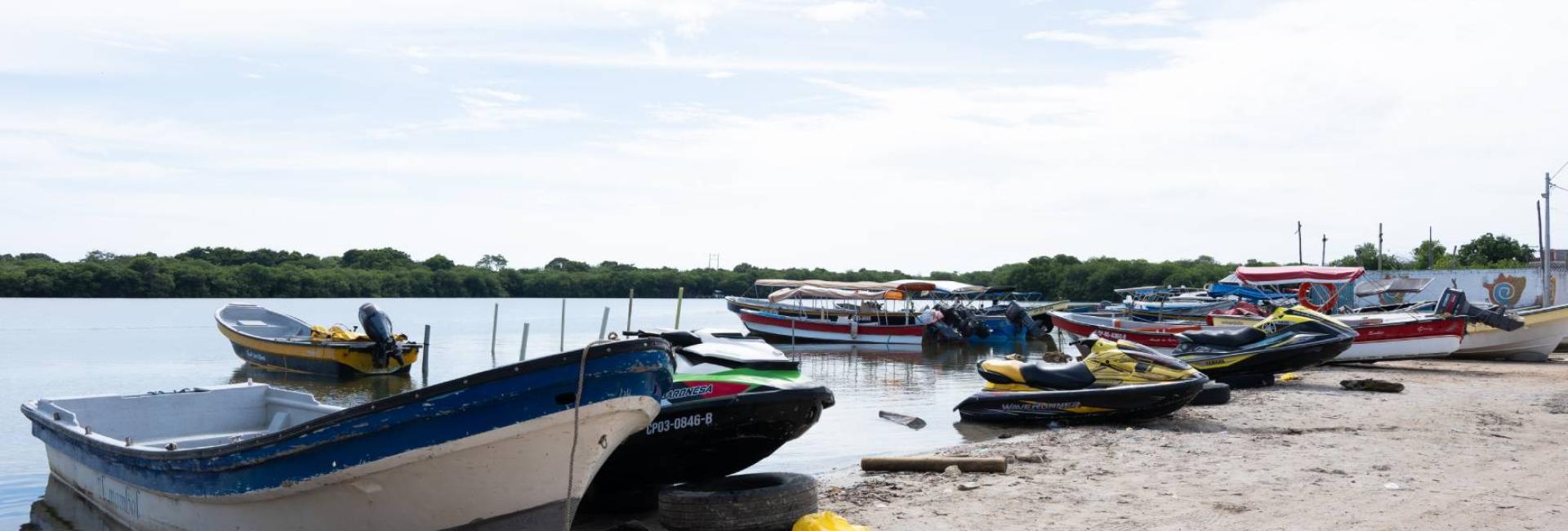
Located on the peninsula of the same name, the village of Barú originated more than 300 years ago as a settlement of Afro-descendants who fled slavery during the colonial period. Its approximately 4,500 inhabitants are known for forming a well-organized community that preserves many aspects of its original cultural identity. In addition to tourism, agriculture (especially the cultivation of coconuts and other fruits) and artisanal fishing are the main pillars of the local economy.
The beauty of the district of Barú lies in the beaches that surround it and in the way the sea and sand blend with traditional houses, which combine the aesthetics of the republican era with popular elements in a colorful contrast, further enriched by façades decorated with murals. Its pier is the epicenter of economic life, driven by both tourism and fishing activity. The House of Culture (Casa Amarilla Museum) is a permanent museum of handicrafts—especially wood carvings—and also serves as a music school.


- Boat ride time: 45 minutes approx.
- Patron saint festivities: Fisherman's Festival (June 24)